

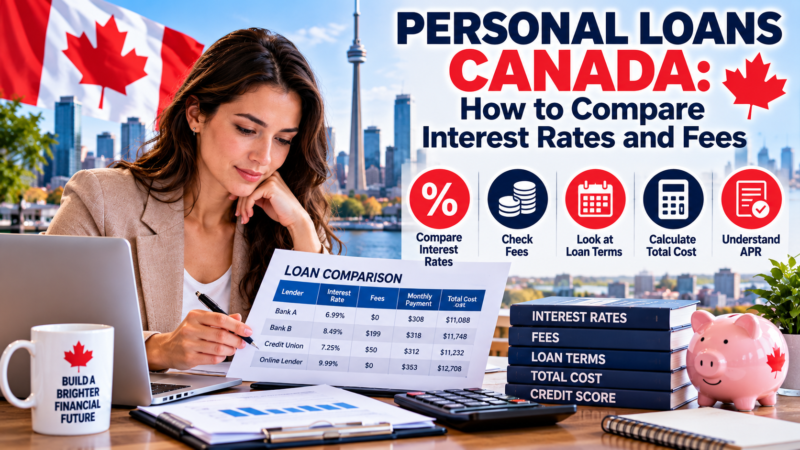
Kayonews-Finding a personal loan in Canada is not only about getting the lowest advertised interest rate. The total cost can also depend on fees, repayment terms and the amount you borrow.
A loan with a lower monthly payment may cost more if the repayment period is longer. Canada’s Financial Consumer Agency recommends looking at the total cost of borrowing before signing a personal loan agreement.
What Is a Personal Loan in Canada?
A personal loan lets you borrow a fixed amount and repay it through regular instalments over an agreed period.
Personal loans can be used for expenses such as home renovations, vehicles, furniture or debt consolidation.
According to the Financial Consumer Agency of Canada, personal loans commonly range from $100 to $50,000, with terms ranging from six to 60 months. Actual amounts and terms depend on the lender and borrower.
Most lenders will review your income, existing debts, credit history and credit score when assessing an application.
These factors can influence the loan amount, interest rate and terms you receive.
Compare the Interest Rate First
The interest rate is one of the most important factors when comparing personal loans.
A lower rate generally means less interest over the life of the loan, assuming the other terms are comparable.
For example, a $10,000 loan at 8% can have a significantly different total cost from the same loan at 15%.
However, borrowers should not compare rates alone.
The loan term and additional charges can change the final amount paid.
Look at the APR and Other Charges
When comparing personal loans, check the annual percentage rate or APR where it is provided.
For federally regulated financial institutions, loan disclosure information can include the annual interest rate, APR and other charges that apply to the agreement.
Canada’s financial consumer regulator explains that the total cost of a personal loan can include the principal, interest and applicable fees.
Potential charges can include administrative fees, broker charges, insufficient-funds fees and other costs specified in the agreement.
Always read the complete loan disclosure before accepting an offer.
Don’t Focus Only on the Monthly Payment
A low monthly payment can make a loan appear affordable.
However, a longer repayment period can increase the total interest you pay.
Consider a simplified example:
| Loan Option | Monthly Payment | Term | Total Payments |
|---|---|---|---|
| Option A | $315 | 36 months | $11,340 |
| Option B | $235 | 48 months | $11,280 |
| Option C | $195 | 60 months | $11,700 |
The example illustrates why borrowers should compare total repayment costs rather than simply choosing the lowest monthly payment.
Actual payments will depend on the interest rate, fees and lender terms.
The Financial Consumer Agency of Canada similarly warns that extending the repayment period can increase the overall cost of borrowing.
Fixed vs. Variable Personal Loan Rates
Another factor is whether the interest rate is fixed or variable.
A fixed rate remains unchanged during the applicable loan term.
A variable rate can change depending on the terms of the loan and the underlying rate used by the lender.
FCAC notes that borrowers should understand whether their rate is fixed or variable and consider whether they could afford payments if rates increase.
For borrowers who value predictable payments, knowing exactly how the rate can change is particularly important.
Secured vs. Unsecured Personal Loans
Personal loans can also be secured or unsecured.
A secured loan uses an asset as collateral. If the borrower fails to repay the loan, the lender may have rights over that asset.
An unsecured personal loan does not require collateral.
Because the lender takes on different levels of risk, the interest rate and approval requirements can differ between loan types.
Check Prepayment Rules
Some borrowers want to pay off their personal loan early.
Before signing, check whether the lender allows additional payments or early repayment without a penalty.
Some lenders allow borrowers to make extra payments or repay the loan early without a charge, while others may apply specific fees or conditions.
This can make a significant difference if you expect your income to increase or receive a large amount of money during the loan term.
Compare Loan Offers Using the Same Numbers
The easiest way to compare lenders is to request offers using the same loan amount and repayment period.
For example, compare:
- Loan amount: $15,000
- Term: 36 months
- Interest rate
- APR
- Monthly payment
- Origination or administration fees
- Other charges
- Prepayment rules
- Total repayment amount
Using identical assumptions makes it easier to identify the real cost of each offer.
Consider Your Credit Score
Your credit history and score can affect your borrowing options.
Lenders generally use credit information to assess the risk of lending money.
A stronger credit profile may help a borrower qualify for different loan options or interest rates, although approval and pricing vary by lender.
Before applying, review your budget and make sure the proposed payment fits comfortably within your finances.
Compare Banks, Credit Unions and Other Lenders
Canadian consumers can encounter personal loans from banks, credit unions and other lenders.
Rates, fees and eligibility requirements can differ between institutions.
Canada’s financial consumer agency recommends researching and comparing financial products, including their rates, fees and terms.
Do not assume that your existing bank automatically offers the lowest-cost loan.
Requesting multiple quotes can help you understand the range of available offers.
Watch for Optional Loan Insurance
A lender may offer creditor loan insurance with a personal loan.
This coverage is generally optional, and it can add to the overall cost of borrowing.
FCAC advises borrowers to understand whether loan insurance is optional and what it covers before accepting it.
Ask for the cost and coverage details separately before deciding whether the protection fits your situation.
Personal Loan Comparison Checklist
Before accepting a personal loan in Canada, check:
Interest rate: What annual rate are you being offered?
APR: Does the quoted APR include applicable fees?
Loan term: How many months will you make payments?
Monthly payment: Can your budget comfortably support it?
Total repayment: How much will you pay over the entire term?
Fees: Are there administration, origination or other charges?
Prepayment: Can you repay the loan early without a penalty?
Rate type: Is the interest rate fixed or variable?
Insurance: Is loan insurance optional, and what does it cost?
Credit requirements: What credit and income requirements apply?
Is a Personal Loan Right for You?
A personal loan can provide predictable instalment payments for a defined borrowing need.
However, borrowing more than necessary or extending the repayment period can increase the total cost.
FCAC recommends reviewing your budget before borrowing and considering whether you can comfortably manage the payments.
If you are comparing personal loans for debt consolidation, calculate the total cost of the new loan and compare it with the debts you plan to replace.
A lower interest rate does not automatically mean a lower total cost if additional fees or a longer term significantly change the repayment amount.
FAQ: Personal Loans Canada
What is a good interest rate for a personal loan in Canada?
There is no single rate that applies to every borrower. Rates depend on factors such as credit history, lender, loan type and other application details.
How do I compare personal loans in Canada?
Compare the interest rate, APR, fees, repayment term, monthly payment, total repayment amount and prepayment conditions.
Does a longer loan term reduce the total cost?
Not necessarily. A longer term can reduce the monthly payment but may increase the total interest paid over the life of the loan.
Can I pay off a personal loan early in Canada?
Some lenders allow early repayment without a penalty, while others may have specific conditions or fees. Check your loan agreement before signing.
Do personal loans have fees in Canada?
They can. Applicable fees depend on the lender and agreement. Federally regulated lenders must provide specific cost information in loan disclosures.
Can my credit score affect my personal loan rate?
Yes. Lenders may consider your credit history, credit score and existing debts when determining your loan options and interest rate.
What should I check before applying for a personal loan?
Check your budget, required borrowing amount, interest rate, APR, fees, repayment period and total borrowing cost.
Comparing personal loans in Canada is ultimately about looking beyond the advertised rate. The most useful comparison considers the interest rate, fees, repayment period and total amount you will repay.
Before signing, ask the lender to explain any term or charge you do not understand. That simple step can help you avoid comparing loans based only on their monthly payment.(*)
Editor : Fanda Yosephta