


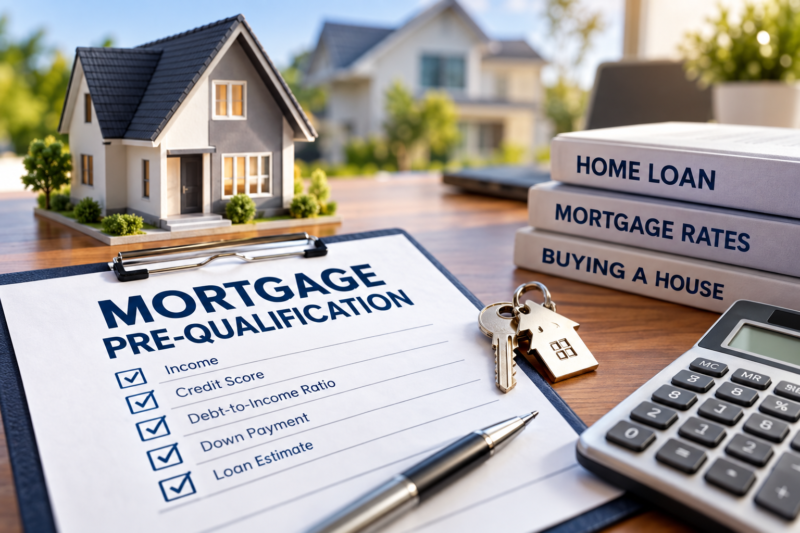
Kayonews-Mortgage pre-qualification is often one of the first steps toward buying a home. It gives potential buyers an early estimate of how much they may qualify to borrow. The process can also help buyers understand their potential price range before shopping for a property. However, pre-qualification is not a guarantee that a lender will approve a mortgage. The final loan decision can require additional financial reviews and documentation.
Mortgage pre-qualification usually starts with basic financial information. A lender may ask about income, employment, monthly debt, savings, and the planned down payment. The lender can use this information to estimate potential borrowing capacity. Some lenders may also review credit information during the process. Requirements can vary between lenders, so buyers should check the process before submitting an application.
Income is an important factor in mortgage qualification. Lenders generally want to understand whether a borrower can manage the proposed monthly payment. Existing debt can also affect borrowing capacity. This includes payments for credit cards, student loans, auto loans, and other debts. The lender may consider the borrower’s debt-to-income ratio, commonly known as DTI. A lower DTI can provide more room for a new housing payment.
The down payment can also influence the mortgage calculation. A larger down payment may reduce the amount a buyer needs to borrow. Buyers should also consider costs beyond the mortgage payment. Property taxes, homeowners insurance, mortgage insurance, maintenance, and closing costs can increase the total cost of homeownership. Therefore, the maximum amount a lender estimates should not automatically become a buyer’s home-shopping budget.
Mortgage pre-qualification and pre-approval are different processes. Pre-qualification generally provides an early estimate based on information supplied by the borrower. Pre-approval typically involves a more detailed review of financial information. Depending on the lender, that review may include documentation and a credit check. Neither process guarantees that the final mortgage will be approved. Buyers should confirm the lender’s specific requirements before relying on either result.
Credit inquiries can also differ between lenders. Some pre-qualification processes may use information without a hard credit inquiry. Other lenders may perform a credit check as part of their process. A borrower should ask whether the lender will perform a hard or soft inquiry before proceeding. This distinction can matter for consumers who are actively comparing mortgage options.
Getting pre-qualified can be relatively straightforward. First, review income, debt, savings, and expected down payment. Next, compare lenders and check their pre-qualification requirements. Then provide the requested financial information. After reviewing the information, the lender may provide an estimated mortgage amount. Buyers can use that estimate as a starting point for their home search. They should continue reviewing their budget as actual property costs become available.
Mortgage pre-qualification can be useful, but buyers should treat it as an early planning tool. The estimated amount may change after the lender verifies income, assets, credit, debts, and other information. Buyers should also compare interest rates, loan terms, fees, and total monthly costs. Understanding these factors can make the home-buying process more predictable. A carefully reviewed budget can help buyers avoid focusing only on the largest loan amount available.
Frequently Asked Questions
What is mortgage pre-qualification?
Mortgage pre-qualification is an initial estimate of how much a borrower may be able to borrow. It is generally based on financial information provided to a lender.
How much mortgage can I qualify for?
The amount depends on factors such as income, debt, credit information, down payment, loan terms, and lender requirements.
Does mortgage pre-qualification affect my credit score?
It depends on the lender’s process. Ask whether the lender uses a soft or hard credit inquiry before applying.
Is mortgage pre-qualification the same as pre-approval?
No. Pre-approval usually involves a more detailed review of the borrower’s financial information.
Can I get mortgage pre-qualification online?
Many lenders offer online applications or pre-qualification tools. The information requested and review process can vary by lender.
How long does mortgage pre-qualification take?
The timing depends on the lender and the information required. A process using basic information may be faster than one requiring additional verification.
What should I do after mortgage pre-qualification?
Compare lenders, review potential monthly costs, and consider whether the estimated payment fits your budget. If you are ready to proceed, you can explore mortgage pre-approval. (*)
Editor : Fanda Yosephta