

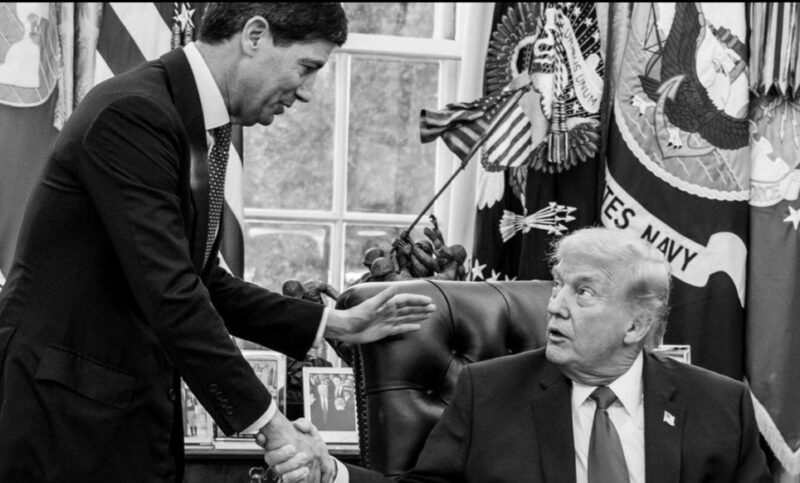
Washington, D.C. — Donald Trump officially inaugurated Kevin Warsh as the new Chair of the Federal Reserve, signaling a major shift in U.S. monetary leadership at a time of growing global economic uncertainty. The ceremony at the White House quickly drew international attention from investors, economists, and financial markets worldwide.
During the inauguration speech, Trump emphasized that Warsh must operate independently and avoid outside influence, including pressure from the White House itself. The president stated that the Federal Reserve should focus entirely on controlling inflation, maintaining economic growth, and protecting the strength of the U.S. dollar amid rising geopolitical tensions and volatile oil prices.
The appointment marks the end of the controversial era under former Fed Chair Jerome Powell, whose relationship with Trump had often been tense. Trump repeatedly criticized Powell for refusing to cut interest rates aggressively during periods of economic slowdown, arguing that high borrowing costs hurt American businesses and consumers.
Kevin Warsh’s nomination, however, has not escaped criticism. Senior Democratic Senator Elizabeth Warren questioned whether Warsh could truly remain independent from political influence. Critics fear the new Fed leadership could face mounting pressure to lower rates ahead of the upcoming economic cycle, especially as inflation remains a major concern for American households.
Despite the criticism, Warsh promised to defend the Federal Reserve’s independence and credibility. In his remarks, he said the U.S. economy still has enormous potential for growth if monetary policy remains disciplined and focused on long-term stability. He also pledged to prioritize inflation control while supporting sustainable employment growth across the country.
The Federal Reserve currently maintains interest rates between 3.5% and 3.75%, reflecting caution amid global instability, including ongoing tensions in the Middle East and concerns over energy prices. Financial analysts believe Warsh’s first few policy meetings could heavily influence stock markets, bond yields, mortgage rates, and the future direction of the U.S. economy.
Market observers are now closely watching whether Warsh will continue the Fed’s cautious stance or move toward interest rate cuts in the coming months. Wall Street investors expect his leadership style to shape not only U.S. economic recovery but also global financial sentiment, especially in emerging markets sensitive to Federal Reserve policy decisions.
As the world’s most influential central bank enters a new chapter, Kevin Warsh faces enormous pressure to balance inflation, economic growth, labor markets, and investor confidence. His ability to maintain credibility while navigating political expectations could determine the future stability of both the American economy and global financial markets.
FAQ
Who is Kevin Warsh?
Kevin Warsh is the newly appointed Chair of the Federal Reserve and a former member of the Fed Board of Governors known for his financial market expertise.
Why is Kevin Warsh’s appointment important?
His appointment could significantly impact U.S. interest rates, inflation policy, stock markets, mortgage rates, and global economic conditions.
What did Donald Trump say about the new Fed Chair?
Donald Trump said he wants Warsh to remain fully independent and focus on doing what is best for the American economy.
Why was Jerome Powell criticized by Trump?
Trump often criticized Jerome Powell for keeping interest rates too high and not supporting faster economic growth through aggressive rate cuts.
How could Kevin Warsh affect the economy?
Warsh’s decisions on interest rates and inflation control could influence borrowing costs, employment, investment markets, and overall economic growth.
Tags: Kevin Warsh, Donald Trump, Federal Reserve, Fed Chair, US economy, interest rates, inflation, Jerome Powell, Wall Street, Federal Reserve policy